Building a local business website that works: the key parts you need to know
What makes a local business website perform
A website for a local business has a different job than a national e-commerce site or a blog. Its main purpose is to turn nearby searchers into customers who walk through the door, pick up the phone, or fill out a contact form. When done well, small business website design focuses on clarity, speed, and local relevance. Every element on the page should push a visitor one step closer to taking action.
The challenge is that most business owners are not web designers. They hear terms like "responsive layout", "schema markup", and "call to action" and wonder which parts actually matter. This article breaks down the essential components of a high-performing local business website so you know what to look for, what to ask for, and what to avoid.
Clear navigation and a focused homepage
The homepage is often the first page a potential customer sees. It should answer three questions in seconds: who you are, what you offer, and where you are located. A cluttered homepage with too many options confuses visitors. Stick to a clean layout with a clear headline, a brief description of your service, and a prominent button that leads to the next step - whether that is a contact form, a phone number, or a service page.
Navigation should be simple. Limit the main menu to five or six items: Home, Services, About, Contact, and maybe a Gallery or Testimonials. Dropdown menus can work, but keep them shallow. Every page should have a clear path back to the homepage and a visible way to get in touch.
Mobile-friendly design is non-negotiable
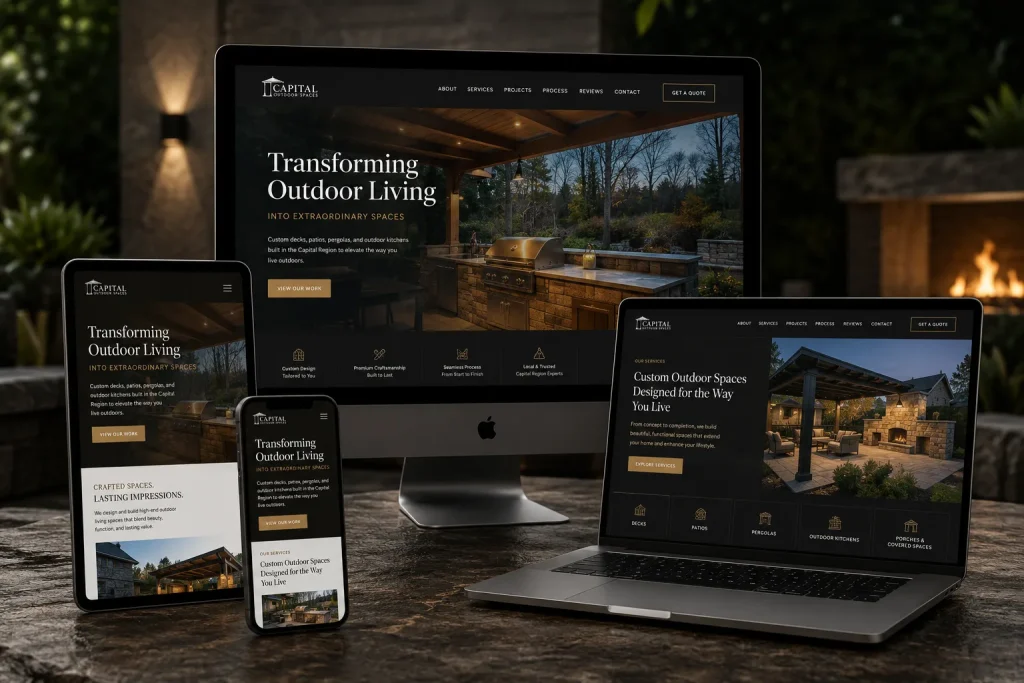
More than half of local searches happen on a phone. If your website does not load properly on a small screen, you are turning away potential customers before they even see your content. Mobile-friendly design means buttons are big enough to tap, text is readable without zooming, and forms are easy to fill out on a touchscreen.
This is not just about shrinking the desktop version. A good mobile layout reorders content so the most important information - phone number, address, and a call-to-action button - appears near the top. Images should scale down without becoming distorted, and the menu should collapse into a simple hamburger icon.
Speed matters more than you think
Page load time affects both user experience and search rankings. A site that takes more than three seconds to load loses a large share of visitors. Local customers are often searching on the go, and they will not wait around. Compress images, minimise the use of large video files, and choose a reliable hosting provider. Tools like Google PageSpeed Insights can give you a sense of where your site stands, but the real measure is how it feels when you visit it on your own phone.
A fast site also signals to search engines that the site is well maintained. Google has stated that page speed is a ranking factor for mobile searches, so a slow site can hurt your visibility in local results.

Local information front and centre
A local business website must make it easy for visitors to find your location and contact details. Your name, address, and phone number (NAP) should appear on every page, usually in the header or footer. Consistency is critical: the NAP data on your website must match exactly what appears on your Google Business Profile and any other directories. Even a small difference, like "Street" versus "St.", can confuse search engines and hurt your local rankings.
Beyond the basics, include a dedicated contact page with a map, a contact form, and your business hours. If you serve a specific area, mention it clearly. For example, a plumber in Oak Park should state that they serve Oak Park and the surrounding suburbs. This helps search engines connect your site to local search queries.
Credibility signals that build trust
Local customers want to know they can trust you before they call. Including credibility signals on your website helps reduce that hesitation. Reviews and testimonials from real customers are powerful. If you have a Google Business Profile with positive reviews, consider displaying a few of them on your site. Just make sure you have permission from the reviewer and that you are not misrepresenting the feedback.
Other trust signals include a clear privacy policy, a professional logo, and a well-written About page that tells your story without sounding like a sales pitch. If you have professional certifications, industry awards, or memberships in local business organisations, mention them. Avoid using stock photos that look generic; real photos of your team or your work create a stronger connection.
Content that answers local questions
Your website should do more than list services. It should answer the questions your customers are actually asking. For example, a dentist in Evanston might write a page about what to expect during a first visit, or a landscaper in Naperville could explain how to prepare a yard for spring planting. This kind of content shows expertise and helps your site appear in search results for those specific queries.
Each service page should describe what you offer, how it works, and what the customer can expect. Avoid vague language like "we provide quality service". Instead, be specific: "We install paver patios using natural stone and offer a five-year workmanship guarantee." Specificity builds confidence and helps search engines understand your relevance.
A blog can be a useful addition, but only if you can update it regularly. A neglected blog with three posts from two years ago can hurt your credibility. If you do not have time to write, consider adding a FAQ page that addresses common questions. That format is easier to maintain and still provides valuable content.
Search engine optimisation for local visibility
Small business website design must include local search engine optimisation (SEO). This means more than just adding keywords to your pages. It involves technical elements like title tags, meta descriptions, header tags, and image alt text. It also means structuring your site so that search engines can crawl it easily.
One of the most effective local SEO tactics is creating a Google Business Profile and linking it to your website. The profile should include your correct NAP, business category, hours, and photos. Encourage customers to leave reviews there, because positive reviews improve your chances of appearing in the local map pack.
Another important element is local schema markup. This is a bit of code added to your site that tells search engines exactly what your business is, where it is located, and when it is open. It helps search engines display rich snippets in search results, which can increase click-through rates. A web designer familiar with local SEO can implement this for you.
Clear calls to action throughout
A website without a clear next step is a dead end. Every page should guide the visitor toward an action, whether that is calling, emailing, booking an appointment, or requesting a quote. The call to action (CTA) should be visible without scrolling, especially on mobile. Common CTAs for local businesses include "Call Now", "Get a Free Estimate", "Book Online", and "Visit Our Showroom".
Do not bury the CTA at the bottom of a long page. Place it near the top and repeat it once or twice more as the user scrolls. The button should stand out from the rest of the design, using a contrasting color and clear, action-oriented text.
Analytics and ongoing improvement
Once your website is live, the work is not done. Setting up analytics tools like Google Analytics or a privacy-compliant alternative lets you see how visitors find your site, which pages they visit, and where they drop off. This data helps you make informed decisions about what to improve. For example, if most visitors leave after viewing the contact page, the form might be too long or the page might lack a phone number.
Regular reviews of your site's performance can catch issues before they become problems. Check for broken links, outdated information, and slow load times. A yearly content refresh, even if it is just updating your service descriptions or adding new testimonials, keeps the site feeling current.
A well-designed local business website is a long-term investment. It should grow with your business and adapt to changes in how people search. Working with a team that understands both design and local SEO, like the one at lemurmarketing.net, can help you avoid common pitfalls and build a site that actually brings in customers.
Putting it all together
The essential parts of a high-performing local business website work together as a system. Fast load times, clear navigation, mobile-friendly design, and local SEO all support the same goal: turning a searcher into a customer. Each piece matters, but none of them works well in isolation. A beautiful design that loads slowly will lose visitors. A fast site with no credibility signals will not earn trust. A site that ranks well but has a confusing layout will not convert.
Start by auditing your current site against the points above. If you are building a new site, keep these components in mind from the start. For many business owners, partnering with a professional who understands local marketing makes the process smoother. A resource like lemurmarketing.net can provide the expertise needed to get the details right, from layout to local SEO. The goal is not a perfect site on day one, but a solid foundation you can improve over time.
 LinkedIn
 Facebook
 YouTube